 Pin it
 The first time I made teriyaki salmon, I was trying to impress someone who'd just returned from Tokyo with impossibly high food standards. I'd never worked with mirin before, and honestly, I was nervous about the whole thing. But then something magical happened in that small saucepan—the soy sauce, the sweetness, the ginger hitting the heat all at once created this aroma that immediately felt right. Twenty minutes later, watching their face as they took that first bite made me realize this dish wasn't just dinner, it was a conversation between cultures on a plate.
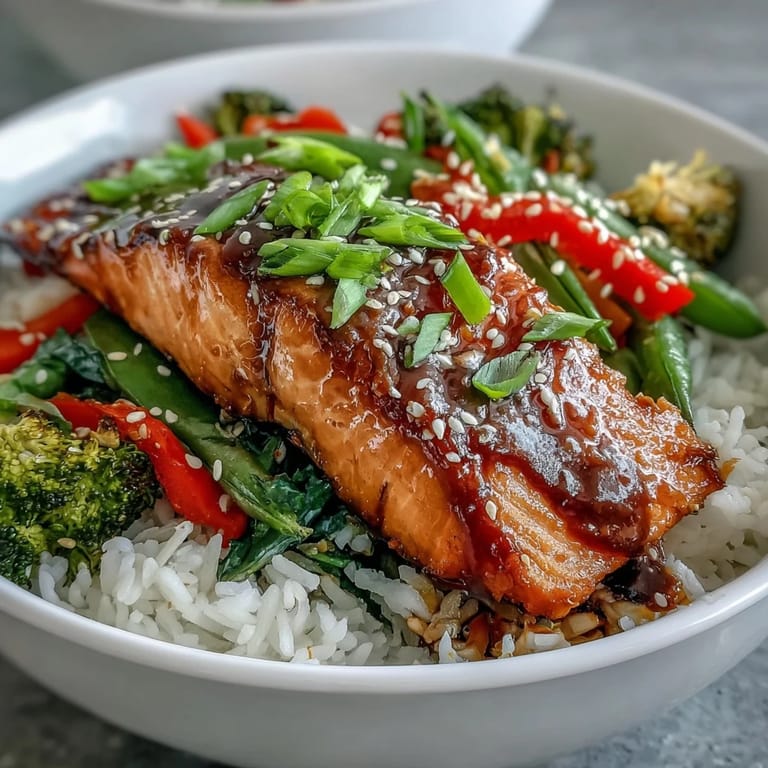
There's a memory I have of cooking this for my roommate on a particularly rough Monday, the kind where you just need something vibrant and nourishing. The colors of the vegetables catching the light, the steam rising off the rice, the salmon's gentle flake when we broke into it—it became this little moment of care in the middle of chaos. She asked for the recipe that night, and now whenever I make it, I think of how food becomes a language when words aren't quite enough.
Ingredients
- Salmon fillets (4 pieces, about 150g each): Look for fillets that feel firm and smell fresh like the ocean, not fishy; skin-on gives you crispness if you're comfortable with it.
- Soy sauce (60 ml): This is your umami foundation, so use something you'd actually drink in miso soup—quality matters here.
- Mirin (60 ml): Don't skip this or substitute with regular sugar; mirin has a complexity that creates depth in the glaze.
- Brown sugar (2 tbsp): Adds warmth and helps the sauce coat the salmon like silk.
- Rice vinegar (1 tbsp): The bright note that keeps everything from feeling one-dimensional.
- Sesame oil (2 tsp): A little goes a long way; this is about aroma and subtle richness, not drowning the dish.
- Garlic and ginger (2 cloves minced, 1 tsp grated): The soul of the sauce; fresh is non-negotiable here.
- Cornstarch slurry (1 tsp cornstarch mixed with 2 tsp water): This tiny mixture is your secret weapon for achieving that restaurant gloss without flour.
- Bell pepper, carrot, broccoli, sugar snap peas: Seasonal is best, but these four create color, texture, and something for your teeth to do.
- Jasmine or sushi rice (300g): The fluffy canvas everything else sits on; rinsing it matters more than you'd think.
- Sesame seeds and spring onions (for garnish): These finish the bowl like punctuation, adding crunch and a final aromatic layer.
Tired of Takeout? 🥡
Get 10 meals you can make faster than delivery arrives. Seriously.
One email. No spam. Unsubscribe anytime.
Instructions
- Get your rice started first:
- Rinse it under cold running water, swishing it around until the water goes from milky to clear—this removes excess starch so each grain stays separate and fluffy. Combine the rinsed rice with water in a saucepan, bring it to a rolling boil, then immediately turn the heat down to low, cover it, and forget about it for 15 minutes.
- While rice steams, build the sauce:
- In a small saucepan over medium heat, combine soy sauce, mirin, brown sugar, rice vinegar, sesame oil, minced garlic, and grated ginger—let it warm and smell incredible while you stir until the sugar dissolves completely. This is the moment to taste and adjust; it should sing with salty-sweet harmony.
- Create the glaze magic:
- Once your sauce base is happy, give that cornstarch slurry a final stir (it settles), pour it in slowly while stirring, and watch as the sauce transforms from thin to glossy in about a minute or two. This is the difference between a sauce and a glaze.
- Season and sear the salmon:
- Pat your salmon dry with paper towels (this is crucial for browning), sprinkle salt and pepper generously on both sides, then place it skin-side down in a hot nonstick skillet with just a splash of oil. Let it sit undisturbed for 3 to 4 minutes—you want that golden crust forming, and trust your ears listening for a gentle sizzle.
- Finish the salmon gently:
- Flip carefully, cook for another 2 to 3 minutes until the flesh is opaque but still tender inside, then brush generously with that teriyaki glaze you made. Give it just 1 minute more to caramelize slightly, then transfer to a plate.
- Get the vegetables crisp and alive:
- In a hot wok or large skillet with vegetable oil screaming hot, add your bell pepper, carrot, broccoli, and sugar snap peas—keep them moving for 3 to 4 minutes so they stay crunchy and bright, not soft.
- Bring it all together:
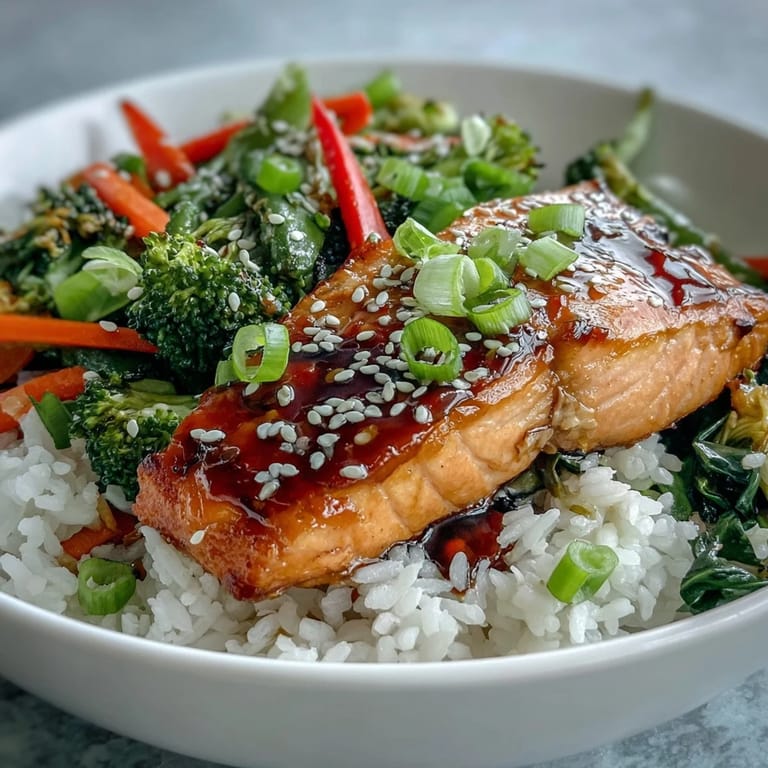
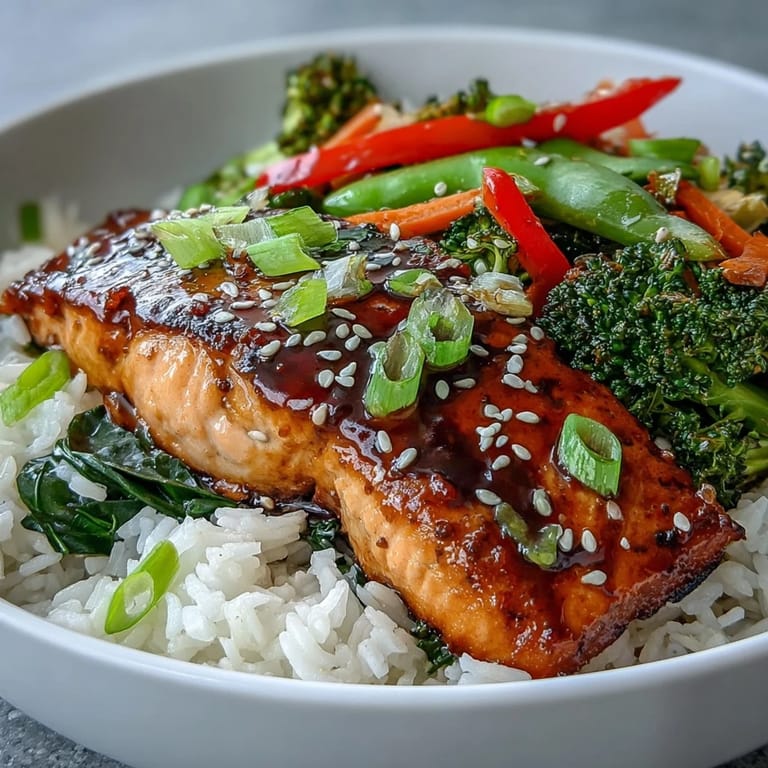
- Fluff your rice with a fork, divide it among bowls, arrange the stir-fried vegetables on top, place a piece of salmon on each, then drizzle with extra sauce. A scatter of sesame seeds and fresh spring onions makes it feel finished.
 Pin it
 What strikes me most about this dish is how it teaches you something about balance—the savory-sweet dance, the heat against the cool crunch, the speed of cooking against the patience of rice steaming. It's become my default when I want to feel like I'm doing something thoughtful in the kitchen without the stress.
On Choosing Your Salmon
I learned the hard way that not all salmon fillets are created equal, and it happened at a farmers market when an older gentleman asked me how I'd been cooking mine. He explained that Atlantic salmon, while affordable, gets flabby if you're not careful with timing, whereas wild salmon holds its shape beautifully. Since then, I've noticed the difference instantly in how the glaze clings and how the texture feels on my fork. If your budget allows, wild salmon rewards you with a firmer bite and a more interesting flavor that plays well with the teriyaki.
The Rice Moment
There's something almost meditative about rinsing rice properly—your hands moving through the grains, watching the water gradually clear like you're polishing something. I used to skip this step entirely, and my rice would come out gummy and disappointing. Now it's become this small ritual that signals to me we're doing this right, taking time for the fundamentals. The resting period after cooking is just as important; that 5 minutes of covered sitting lets the steam redistribute and creates that fluffy texture that makes the whole bowl feel generous.
Vegetable Swaps and Seasonal Thinking
One of my favorite discoveries was realizing this bowl is actually a vehicle for whatever needs eating from your crisper drawer or what looked beautiful at the market that morning. I've made it with zucchini in summer, mushrooms in fall, baby corn when I'm feeling experimental, and it's never once disappointed. The stir-fry timing stays the same, but the conversation between the salmon and vegetables changes with the seasons, which somehow keeps this from ever feeling like you're cooking the exact same thing twice.
- Spring onions, when sliced thin and scattered fresh, add a sharp green note that cuts through the richness perfectly.
- If you have access to fresh shiso leaf, a single leaf under the salmon before the glaze creates this floral undertone that feels like a luxury.
- Don't cook your garnish in the pan; save it for that final moment so it stays bright and alive against the warmth of the bowl.
 Pin it
 This bowl has become my answer to the question, "What should we make?" when there's not much time but you want something that tastes like you really tried. It's nourishing enough to feel like a real meal, quick enough not to feel like a chore, and genuinely delicious enough that you'll find yourself thinking about it for days after.
Recipe Questions & Answers
- → Can I use other fish instead of salmon?
Yes, this glaze works beautifully with other fatty fish like cod, sea bass, or mahi-mahi. Adjust cooking time based on fillet thickness.
- → How do I store leftovers?
Store components separately in airtight containers. Refrigerate for up to 3 days. Reheat rice and vegetables gently, and warm salmon briefly to avoid drying.
- → Can I make the sauce ahead?
Absolutely. Prepare the teriyaki sauce up to 5 days in advance and refrigerate. Reheat gently before glazing the salmon.
- → Is this suitable for meal prep?
Yes, portion into individual containers for easy lunches. Keep sauce separate and drizzle just before eating for best texture.
- → Can I make this gluten-free?
Simply substitute regular soy sauce with tamari or coconut aminos. The rest of the ingredients are naturally gluten-free.