 Pin it
 One afternoon, my kitchen filled with the smell of tomatoes turning golden in the oven, and I realized how much patience can transform something simple into something extraordinary. That day taught me that roasting vegetables isn't just a technique—it's a way of coaxing out every bit of sweetness and depth they have to offer. When I blended those caramelized tomatoes with fresh basil, the color alone made me pause. This soup became my answer to those moments when I wanted something that tasted like a restaurant chef had spent hours perfecting it, but I'd only invested forty-five minutes.
I made this for my neighbor one October evening when her kitchen was being renovated, and watching her face when she tasted it made me understand why people keep recipes close. She'd expected something ordinary, maybe a quick stovetop version, but instead found herself transported. That's when I knew this wasn't just soup—it was the kind of dish that makes someone feel cared for.
Ingredients
- Ripe tomatoes (1.5 kg or 3.3 lbs), halved: Look for tomatoes that smell fragrant at the stem—that's your signal they're ready to become something magical, and halving them flat helps them caramelize faster.
- Large yellow onion, quartered: Yellow onions turn almost honey-like when roasted, adding a natural sweetness that balances any acidity.
- Garlic cloves (6), peeled: Don't skip this step of peeling them first; it keeps them from getting lost and lets them mellow into the background.
- Extra-virgin olive oil (2 tbsp): This isn't just a cooking medium—it's part of the flavor, so use something you'd actually want to taste.
- Kosher salt and freshly ground black pepper: Season generously now; roasting concentrates flavors, so what seems like enough in the raw won't be.
- Vegetable broth (2 cups): Low sodium lets you taste the vegetables, not the salt, which matters when you're building flavor carefully.
- Fresh basil leaves (1/2 cup, packed): Add this after blending so it stays bright and aromatic rather than cooked to dull green.
- Unsalted butter and sugar (both optional): Butter adds a whisper of richness, and a tiny pinch of sugar can wake up acidity without making the soup taste sweet.
- Heavy cream or crème fraîche for garnish: A drizzle right before serving keeps it tasting fresh and elegant.
- Croutons or toasted bread (optional): These add contrast that makes every spoonful interesting.
Tired of Takeout? 🥡
Get 10 meals you can make faster than delivery arrives. Seriously.
One email. No spam. Unsubscribe anytime.
Instructions
- Heat your oven and prepare the stage:
- Preheat to 220°C (425°F) and line a baking sheet with parchment paper so nothing sticks and cleanup feels like a gift to your future self.
- Arrange and dress the vegetables:
- Place tomato halves cut-side up, scatter onion quarters and garlic cloves around them, then drizzle everything with olive oil and season generously. Toss gently so each piece gets coated, remembering that oil is what carries flavor in the oven.
- Roast until caramelized:
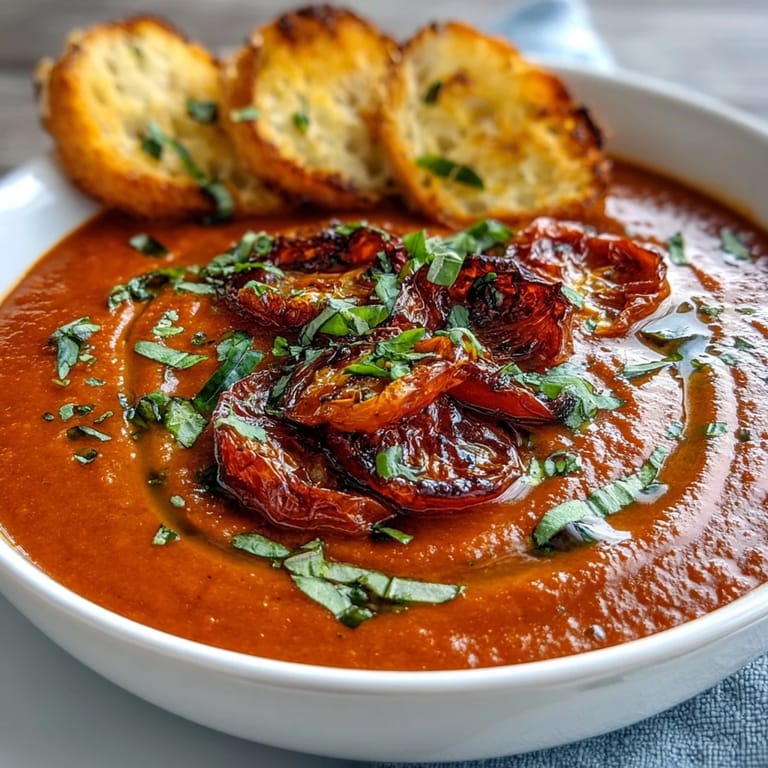
- Slide everything into the oven for 35 to 40 minutes until tomato edges brown and onions turn soft and sweet. You'll know it's right when the kitchen smells almost too good to bear and the edges of the tomatoes have turned a deep rust color.
- Transfer to the pot and simmer:
- Move all roasted vegetables and every precious drop of pan juice into a large pot, add your vegetable broth, and bring to a gentle simmer over medium heat. This is where you taste the difference between rushing and patience—the slower the simmer, the better everything melds.
- Add fresh basil, butter, and balance:
- Stir in fresh basil leaves, butter if using, and that optional pinch of sugar to smooth out any sharp edges. Simmer for 5 minutes just to let these flavors introduce themselves to each other.
- Blend until silky smooth:
- Use an immersion blender right in the pot, or work in batches with a countertop blender before returning everything back home. Blend until there's no texture left, just pure silk.
- Taste, adjust, and refine:
- Taste now and trust your palate—salt, pepper, maybe a whisper more sugar or a splash of balsamic vinegar if something feels flat. For an even more luxurious texture, pour through a fine sieve, though honestly, most people won't miss that final step.
- Serve with intention:
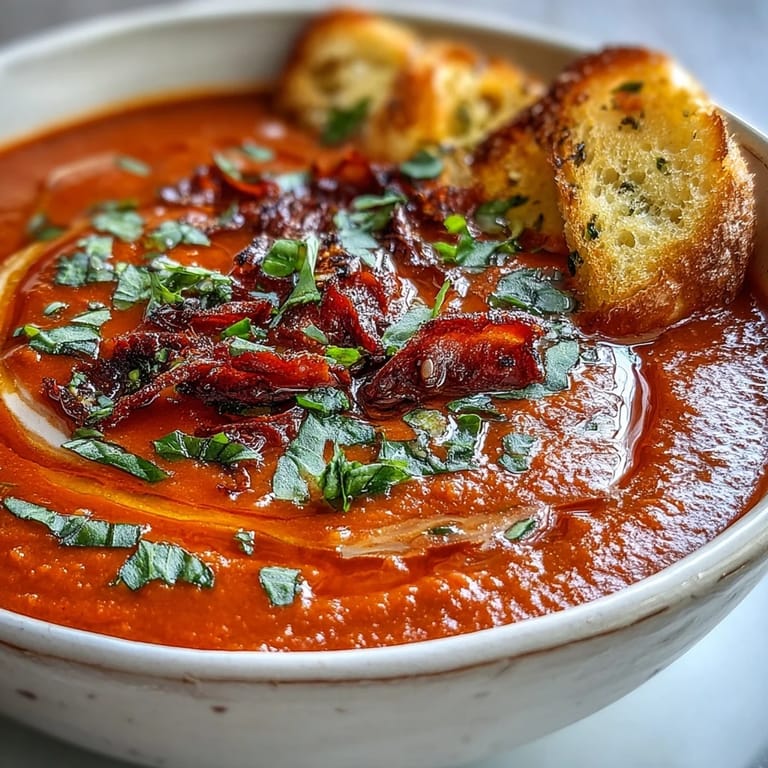
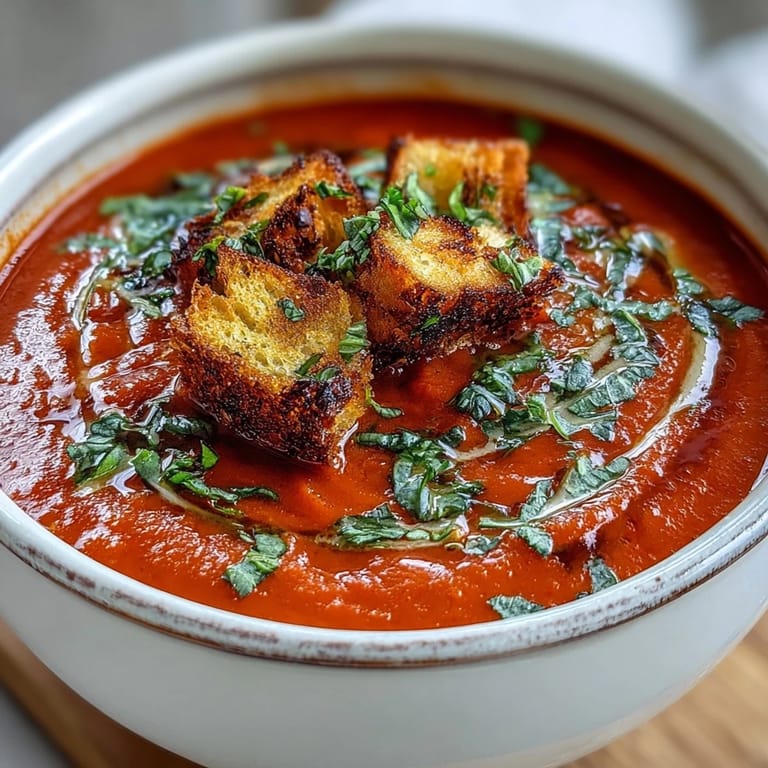
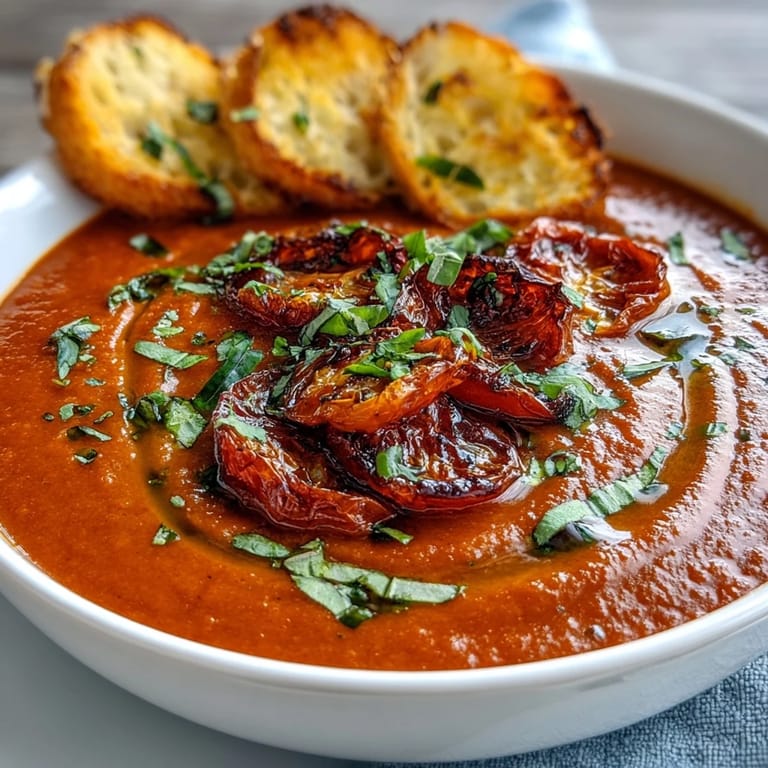
- Ladle into warm bowls, drizzle with cream, scatter fresh basil across the top, and add croutons if you want texture. This is the moment when all that patience pays off.
 Pin it
  Pin it
 There's something about serving a homemade soup that feels like sharing a piece of yourself, especially when steam rises off the bowl and someone leans in to smell it before they even taste it. That small moment—the pause before the first spoonful—is when you know you've done something right.
The Roasting Secret
Roasting is what separates this soup from every other tomato soup you've ever made, and it's not complicated—it's just time and heat working together. The oven's dry, concentrated heat breaks down tomato walls and caramelizes their natural sugars, creating depth that you simply cannot achieve on the stovetop. When tomatoes sit at 220°C, their moisture evaporates and their flavor intensifies into something almost jammy and complex. I used to think I was making tomato soup, but really, I was making the best version of what tomatoes already want to become.
Making It Your Own
This recipe doesn't demand much from you, which means it's the perfect canvas for whatever your kitchen needs. A splash of balsamic vinegar right before serving adds a note of sophistication that catches people off guard in the best way. Red pepper flakes transform it into something with personality and warmth, perfect for when you want comfort that also has an edge. Some evenings I add a teaspoon of tomato paste before blending just to deepen the color and flavor, and other times I leave it pure because the roasted tomatoes speak loudly enough on their own.
Pairing and Serving Wisdom
This soup sits beautifully alongside crusty bread, a simple salad, or even grilled cheese if you're in the mood for something more indulgent. The brightness of a crisp Sauvignon Blanc or rustic Italian white wine pairs so well that it's almost not fair—the wine's acidity echoes the tomato's and together they feel like they were meant to meet. Think about what mood you're creating with this meal, and let that guide everything from garnish to wine choice.
- Make a big batch and freeze portions in individual containers so you have restaurant-quality soup ready whenever you need it most.
- Swirl in a dollop of crème fraîche or Greek yogurt right at the table and let people stir it in however much they like.
- Save any extra basil to float on top just before serving—it's a small gesture that makes everything feel intentional.
 Pin it
  Pin it
 This soup reminds me that sometimes the best things in life are built on patience and good ingredients working exactly as they should. Make it for someone you care about, or make it for yourself on a quiet evening—either way, you're doing something worth doing.
Recipe Questions & Answers
- → Can I use canned tomatoes instead of fresh?
Yes, you can substitute with 2 cans (28 oz each) of whole peeled tomatoes. Drain slightly and roast with the onions and garlic for 25-30 minutes to develop caramelized flavor.
- → How do I make this soup vegan?
Simply omit the butter and cream, or use plant-based alternatives like vegan butter and coconut cream or cashew cream for the same rich texture.
- → Can I prepare this soup in advance?
Absolutely. This soup stores beautifully in the refrigerator for up to 4 days or can be frozen for up to 3 months. Reheat gently on the stovetop and adjust seasoning as needed.
- → Why does the soup need sugar?
Sugar balances the natural acidity of tomatoes, creating a more rounded flavor profile. Start with 1 teaspoon and adjust to taste based on your tomatoes' sweetness.
- → What can I serve alongside this soup?
This pairs beautifully with crusty Italian bread, grilled cheese sandwiches, or a fresh arugula salad. For wine, try a crisp Sauvignon Blanc or rustic Italian white.
- → How can I achieve a smoother texture?
After blending, strain the soup through a fine mesh sieve to remove any remaining seeds or skin particles. This creates an ultra-silky, restaurant-quality texture.