 Pin it
 There's something about autumn that makes me crave warmth in a bowl, and this butternut squash soup has become my go-to remedy for those first chilly evenings. I discovered it years ago when a friend brought a thermos to a harvest festival, and the moment I tasted that velvety sweetness balanced with just a whisper of spice, I knew I had to learn how to make it myself. What started as curiosity turned into a kitchen staple, and now I find myself roasting squash whenever the air gets crisp. The beauty of this soup is how it feels like you're doing something fancy while barely lifting a finger.
I'll never forget serving this to my mom on an unexpected visit during late October when she arrived unannounced with that apologetic look only parents can pull off. I had fresh squash sitting on my counter and decided on the fly to make this soup, and by the time she had her second spoonful, she stopped talking and just savored it in silence. Those quiet moments when food does the talking are the ones that matter most to me.
Ingredients
- Butternut squash (1 large, about 2 lbs): The star of the show, and roasting it first concentrates its natural sugars and adds a subtle caramelized depth that you can't get any other way.
- Yellow onion (1 medium): Chopped and softened in butter, this becomes the aromatic foundation that makes people ask what's that amazing smell.
- Garlic cloves (2): Added after the softer vegetables so it doesn't burn and turn bitter, just a minute or two is all you need.
- Carrot and celery (1 each): These create that mirepoix base that feels restaurant-quality without pretension.
- Olive oil (2 tbsp) and butter (2 tbsp optional): The oil roasts the squash to golden perfection, while butter adds a richness that makes people wonder if there's cream in here.
- Vegetable broth (4 cups): Use low sodium so you can season to your own taste and control the salt level.
- Cinnamon and nutmeg (1/2 tsp and 1/4 tsp): These warm spices are the secret handshake that transforms regular squash soup into something that tastes like fall itself.
- Kosher salt and black pepper: Taste as you go because the broth's saltiness varies, and you want to nail the seasoning yourself.
- Heavy cream or coconut milk (1/4 cup, optional): A drizzle at the end adds luxury, or skip it entirely and the soup still sings.
- Toasted pumpkin seeds and fresh thyme: These garnishes aren't just decoration—they add crunch and herbaceous brightness that complete the experience.
Tired of Takeout? 🥡
Get 10 meals you can make faster than delivery arrives. Seriously.
One email. No spam. Unsubscribe anytime.
Instructions
- Get your oven ready and prep the star ingredient:
- Preheat to 400°F and line a baking sheet with parchment paper. Cut your butternut squash into roughly one-inch cubes, toss them with a tablespoon of olive oil, salt, and pepper, then spread them in a single layer on the sheet.
- Let the squash do most of the work:
- Roast for 25 to 30 minutes, giving it a stir halfway through if you remember. You're looking for tender flesh with caramelized edges that are just starting to turn golden brown—this is where the magic happens.
- Build your flavor base while squash roasts:
- Heat the remaining olive oil and butter in a large pot over medium heat, then add your chopped onion, carrot, and celery. Let them soften for 5 to 7 minutes, stirring occasionally, until they're tender and the kitchen smells incredible.
- Invite the garlic to the party:
- Peel in your garlic cloves and cook for just one minute—you want to wake up the flavor without letting it scorch and turn acrid.
- Bring everything together:
- Add your roasted butternut squash to the pot along with the vegetable broth, cinnamon, nutmeg, salt, and pepper. Bring it to a boil, then lower the heat and let it simmer gently for 10 to 15 minutes so the flavors can mingle.
- Transform it into velvet:
- Using an immersion blender, puree the soup right in the pot until it's completely smooth and luxurious. If you're using a countertop blender, work in batches and let the soup cool slightly first so nothing explodes—I learned this the hard way.
- Taste and adjust:
- This is your moment to be the chef—add a pinch more salt, an extra grind of pepper, or another whisper of cinnamon if you want.
- Finish and serve:
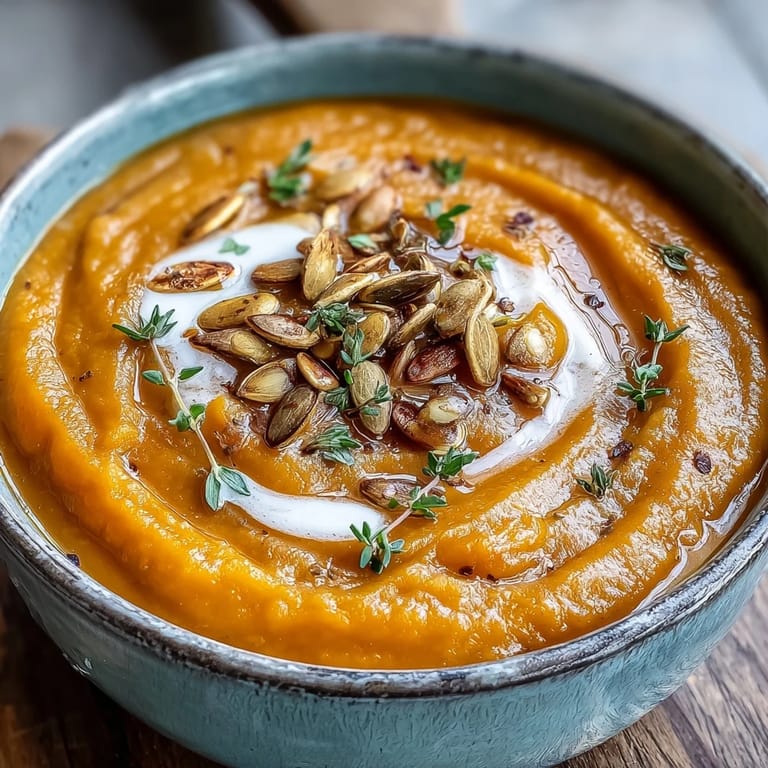
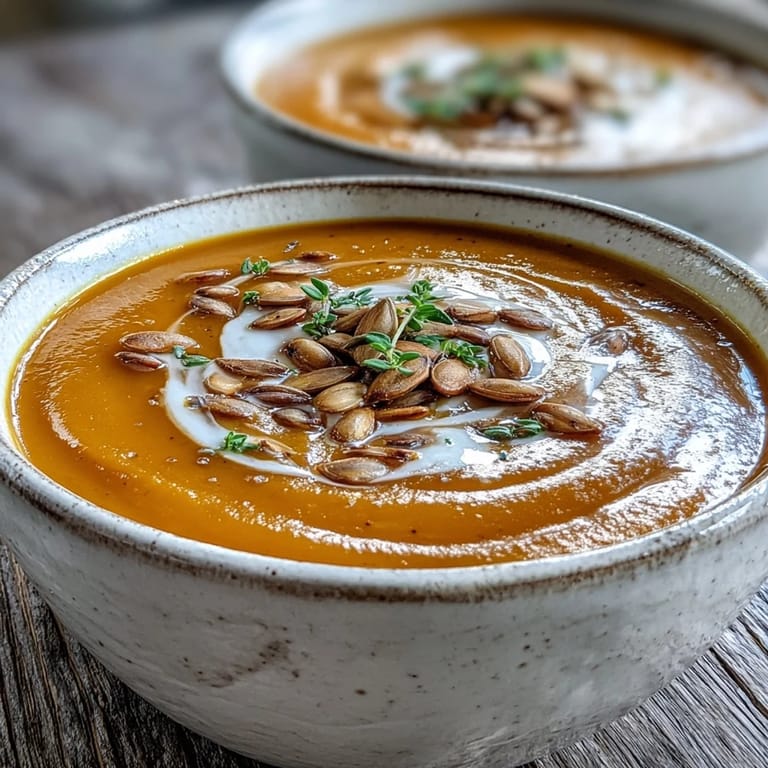
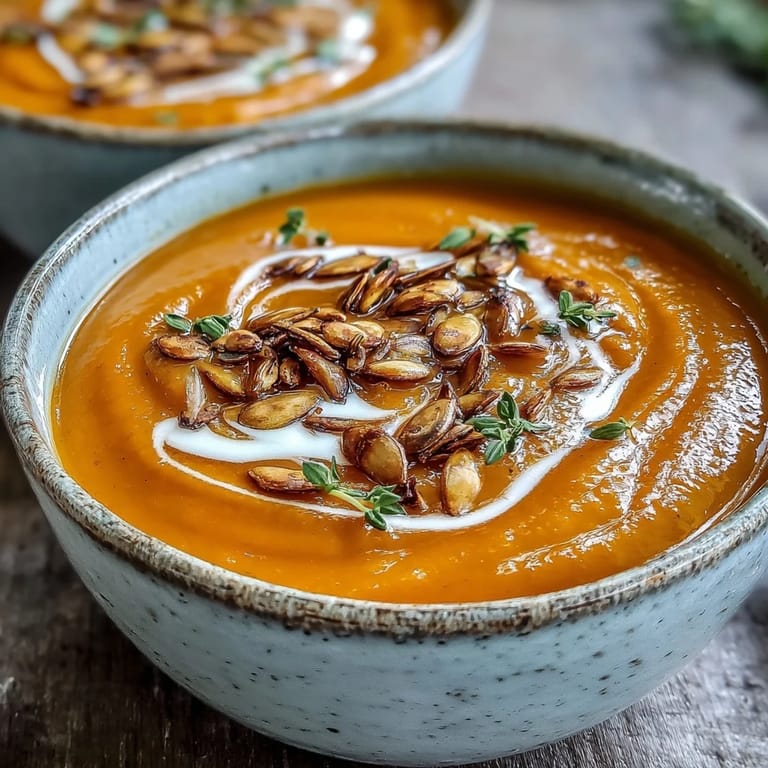
- Ladle into bowls and drizzle with cream or coconut milk if you're using it, then scatter toasted pumpkin seeds and fresh thyme on top.
 Pin it
 There's a moment when you blend this soup and watch it transform from chunky vegetables into pure silkiness that never gets old. It's one of those small kitchen satisfactions that reminds me why I love cooking.
Why Roasting Makes All the Difference
The first time I tried making butternut squash soup by boiling the squash instead of roasting it, the result was technically soup but spiritually disappointingly bland. Roasting concentrates the natural sugars and creates those caramelized edges that give the final dish depth and complexity that plain broth cooking simply cannot achieve. It's the difference between a weeknight food and something people actually want seconds of.
Making It Your Own
This soup is forgiving and flexible, which is part of what makes it so reliable in my kitchen. I've made it with extra ginger for warmth, a pinch of cayenne for those days when I want heat, and even added a splash of maple syrup once when I was feeling experimental. The base is solid enough to support your creativity, whether you're vegan and using coconut milk or you're loading it with cream for maximum comfort.
Serving Suggestions and Storage
Pair this soup with crusty bread and you've got a meal that feels complete and satisfying without being heavy. I always make extra because this soup actually tastes better the next day after the flavors have settled into each other, and it freezes beautifully for up to three months.
- Serve hot from the pot or chill it completely and enjoy it cold on a warm day for a different kind of comfort.
- Leftovers in the fridge stay fresh for about four days, so make it early in the week for quick dinners.
- If you're freezing portions, leave a little room at the top of the container because soup expands as it freezes.
 Pin it
 This soup has become my answer to wanting something homemade that doesn't demand hours in the kitchen. It's the kind of recipe I return to again and again because it never disappoints.
Recipe Questions & Answers
- → Can I make this soup ahead of time?
Yes, this soup stores beautifully in the refrigerator for up to 4 days. You can also freeze it for up to 3 months. Reheat gently on the stovetop, adding a splash of broth if needed to adjust consistency.
- → How do I make this soup vegan?
Simply omit the butter and use only olive oil for sautéing. Replace the heavy cream garnish with coconut milk or any plant-based cream alternative. Ensure your vegetable broth is vegan-certified.
- → Can I use pre-cut butternut squash?
Absolutely! Pre-cut butternut squash is a convenient time-saver. Just make sure to adjust the roasting time slightly as pre-cut pieces may be smaller and cook faster than whole cubed squash.
- → What can I substitute for butternut squash?
You can use other winter squashes like acorn squash, kabocha, or even sweet potatoes. The flavor profile will change slightly, but the cooking method remains the same.
- → How can I make the soup thicker or thinner?
To thicken, simmer longer to reduce liquid or add less broth initially. For a thinner consistency, simply stir in additional vegetable broth or water until you reach your desired texture.
- → Do I need an immersion blender?
No, a regular countertop blender works perfectly. Just be sure to blend in batches and leave the lid slightly open to allow steam to escape. A food processor can also work in a pinch.