 Pin it
 My neighbor Marcus showed up at my door one August afternoon with a basket of peaches so ripe they practically glowed, and I had about two hours to figure out what to do with them before they got too soft. I'd made pie before, but never with peaches this good, and something about the urgency of it—the ticking clock, the sheer perfection of those fruits—made me want to get it right. That's when I learned that the best peach pie isn't about fancy techniques; it's about respecting what the peaches already are and letting them shine through a buttery, golden crust.
I remember pulling this pie out of the oven on a Friday evening while my sister was visiting, and the whole kitchen filled with this smell of caramelized peaches and toasted cinnamon that made everyone stop what they were doing. We ate it still warm, the filling just barely set enough to slice without falling apart, vanilla ice cream melting into the cracks, and nobody said much of anything—just quiet sounds of contentment and the occasional clink of a fork against the plate.
Ingredients
- All-purpose flour: Two and a half cups give you the structure you need; I've learned that weighing it (320g) prevents the dense, tough crust that comes from packing flour down as you scoop.
- Unsalted butter: Use a full cup (225g), cold and cubed; cold butter is the secret to flakiness, and I always keep mine in the freezer until the last possible moment.
- Salt: Just a teaspoon, but it wakes up the sweetness and adds depth to the crust flavor.
- Granulated sugar: One tablespoon for the crust, three-quarters cup for the filling; the sugar in the filling will draw out the peaches' juice and create that glossy, clingy filling.
- Ice water: Start with 6 to 8 tablespoons, adding it slowly so you don't overmix and toughen the dough.
- Ripe peaches: About 6 cups (900g) when peeled and sliced; choose a mix of yellow and white peaches if you can find them, as they give you more complexity than one variety alone.
- Cornstarch: Quarter cup (30g) thickens the filling without making it gluey or weird; it's the quiet ingredient that actually matters.
- Lemon juice: One tablespoon brightens the peaches so they don't taste purely sweet and one-note.
- Ground cinnamon and nutmeg: Half teaspoon cinnamon and a quarter teaspoon nutmeg create warmth without overpowering the fruit.
- Vanilla extract: One teaspoon rounds out the flavor and ties everything together.
- Egg wash: One beaten egg brushed on top gives you that mahogany-brown, glossy finish.
- Coarse sugar: Optional for sprinkling, but it adds a nice textural contrast and catches the light.
Tired of Takeout? 🥡
Get 10 meals you can make faster than delivery arrives. Seriously.
One email. No spam. Unsubscribe anytime.
Instructions
- Make the crust:
- Whisk flour, sugar, and salt together, then cut in the cold butter with a pastry blender or your fingertips until the mixture looks like coarse crumbs—this takes longer than you think it will, but it's worth the patience. Add ice water one tablespoon at a time, stirring gently until the dough just barely comes together; you want it barely holding itself, not wet or smooth.
- Rest the dough:
- Divide in half, shape each into a disc, wrap tightly in plastic, and refrigerate for at least an hour while you go do something else. This resting period lets the gluten relax and the butter stay cold, which is how you get that shatter.
- Prepare the peaches:
- Peel them by dunking briefly in boiling water, then slip the skins off under cool running water. Slice them, toss with sugar, cornstarch, lemon juice, cinnamon, nutmeg, salt, and vanilla, then let them sit for 10 minutes to release their juices.
- Heat the oven and roll the crust:
- Set the oven to 400°F (200°C), then work with one dough disc on a floured surface, rolling it to about an eighth of an inch thick. Transfer it to your 9-inch pie dish, letting it settle naturally without stretching.
- Fill the pie:
- Pour the peach mixture with all its accumulated juices into the crust, spreading it evenly so you get fruit in every bite. The juices might seem like a lot, but the cornstarch will catch them.
- Top and seal:
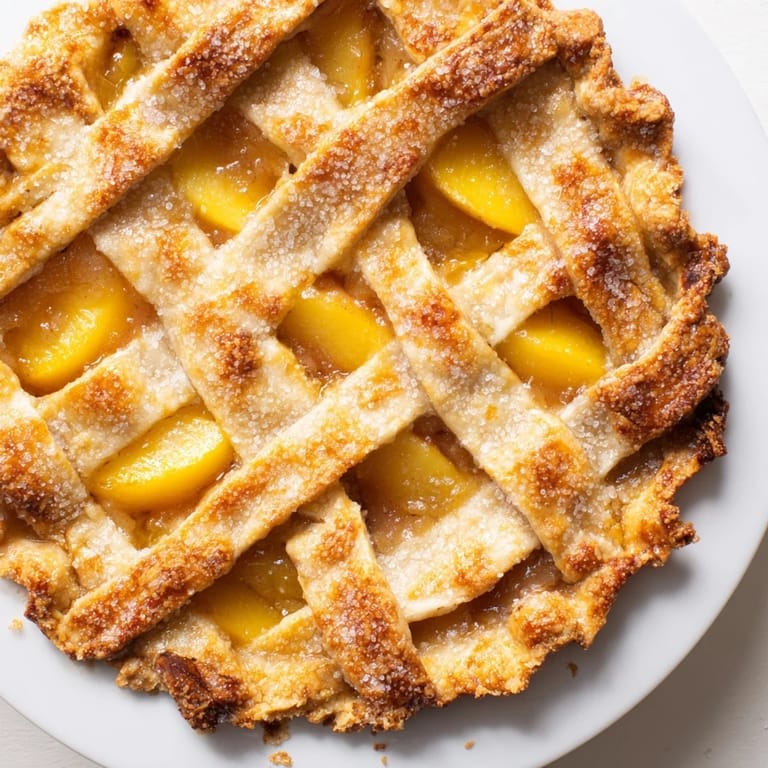
- Roll out the second dough disc and lay it over the filling, or cut strips and weave a lattice if you're feeling fancy. Trim the overhang to about an inch, then fold it under and crimp the edges with your fingers or a fork.
- Vent and egg wash:
- Cut a few slits in the top crust for steam to escape, brush everything with beaten egg, and sprinkle with coarse sugar if you've got it. This is the moment the pie starts looking like something you actually want to eat.
- Bake:
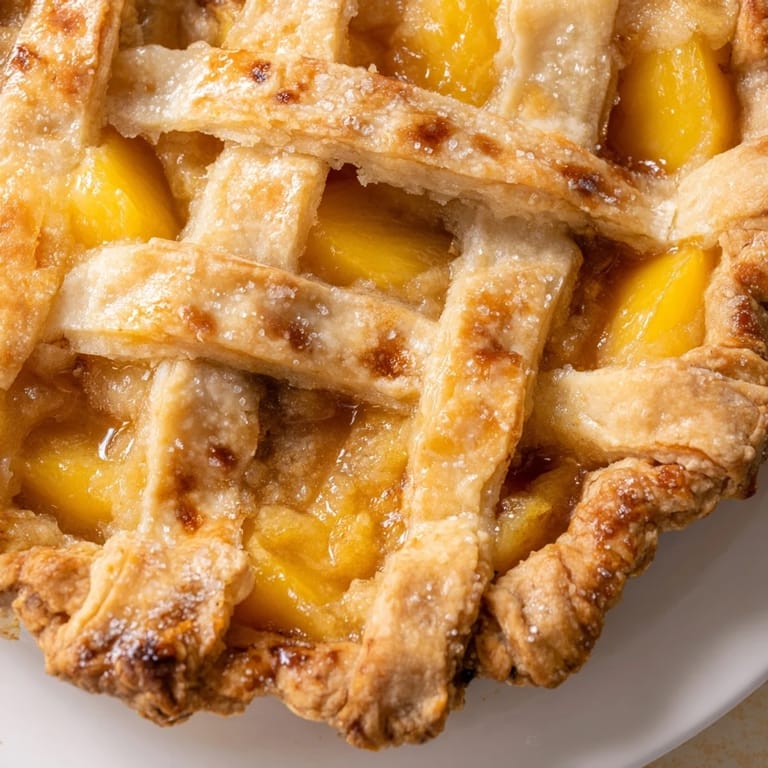
- Slide into the oven for 50 minutes, watching for the crust to turn golden and the filling to bubble up through those vents. If the edges are browning too fast, cover them loosely with foil.
- Cool:
- Let it rest on a wire rack for at least 2 hours before cutting; I know that's a long time, but the filling needs time to set or it'll run all over the plate like soup.
 Pin it
 The first time someone asked me for the recipe, I realized that this pie had become more than just a dessert in my house—it's the thing I make when someone's going through something hard, or when we're celebrating something small. There's a kind of love in taking the time to make something from scratch when you could just buy it.
Choosing Your Peaches
The whole pie lives or dies by the peaches, so take time at the market to find ones that smell like peaches—sweet and musky and almost impossible to ignore. A truly ripe peach should yield slightly to pressure but not feel mushy, and the skin should have some give when you run your thumb over it. If your peaches are a bit underripe, you can still make this pie; they'll just be slightly less juicy, so maybe add an extra tablespoon of lemon juice to brighten them up.
The Crust Technique
Making pie crust is one of those things that seems intimidating until you realize it's just flour, butter, salt, and water in the right proportions, treated with respect. The key is understanding that you're not trying to make a smooth, homogeneous dough; you're trying to keep tiny pockets of cold butter dispersed throughout, which create steam when they heat up, giving you those incredible flaky layers. If your dough cracks when you're rolling it out, that's actually fine—just press the cracks together gently as you work, and they'll seal themselves during baking.
Serving and Storage
Serve this pie warm or at room temperature with vanilla ice cream or whipped cream—the cold against the warm filling is truly unbeatable. Leftover pie keeps well covered at room temperature for a day, or in the fridge for up to three days, and it actually tastes wonderful cold the next morning with your coffee.
- If you're really pressed for time, there's no shame in using a good quality store-bought crust, though homemade is worth the effort.
- A mix of yellow and white peaches gives you more flavor than using just one variety.
- Let the pie cool completely before slicing or you'll end up with hot, jammy filling all over everything.
 Pin it
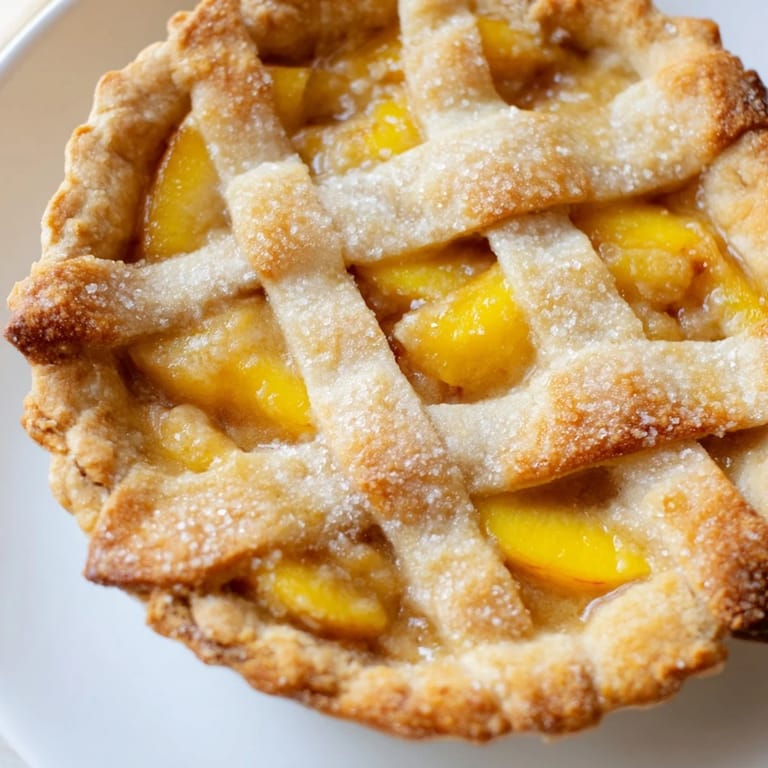
 This pie is summer in a crust, and every time you make it, you get a little better at sensing when the peaches are perfect and when the crust is golden enough. It's honest, uncomplicated food that tastes like someone cared enough to make it right.
Recipe Questions & Answers
- → How do I achieve a flaky crust?
Keep the butter cold and handle the dough minimally to ensure a crisp, flaky crust. Chilling dough before baking helps maintain texture.
- → Can I use frozen peaches?
Fresh peaches are preferred for texture, but frozen, thawed peaches can be used. Drain excess liquid to avoid a soggy filling.
- → What thickens the filling?
Cornstarch is added to the peach mixture to thicken juices released during baking, resulting in a luscious filling.
- → How to prevent crust edges from burning?
Cover edges with foil halfway through baking if they begin to brown too quickly to ensure even doneness.
- → Is it necessary to let the pie cool before serving?
Yes, cooling allows the filling to set properly, making slicing easier and enhancing flavors.