 Pin it
 My kid's school called mid-morning last spring asking me to pack a snack for a surprise field trip, and I had maybe ten minutes before pickup. Instead of panicking, I grabbed a container, spooned in some hummus, and started chopping whatever vegetables were lurking in my crisper drawer. Those little cups became the hit of the day—apparently, every kid wanted to trade snacks with my daughter because she had the only one with a built-in dip. That's when I realized how simple it is to make something that feels fancy but takes almost no time at all.
I made a batch for a hiking trip with my partner last summer, and somewhere around mile three, we realized we'd packed way more snacks than we needed. We sat on a rocky outcrop overlooking the valley, sharing these cups and laughing about how something so simple could taste like the best thing we'd ever made. The vegetables were still crisp from the cooler, the hummus was cool and smooth, and neither of us had to worry about sticky fingers or crumbs everywhere.
Ingredients
- Hummus: Use 1 1/2 cups of store-bought or homemade—store-bought saves time and honestly tastes great, but if you make your own, you control exactly how garlicky or lemony it gets.
- Carrot: One large carrot peeled and cut into sticks; the natural sweetness makes them disappear fast, and they stay perfectly crisp for days.
- Cucumber: One large cucumber cut into sticks; the watery crunch is what makes these cups feel refreshing rather than heavy.
- Red and yellow bell peppers: One of each, seeded and cut into strips; they're naturally sweet and add color that actually makes people want to eat them.
- Snap peas: One cup trimmed; they're sturdy enough to stand upright in hummus and have a satisfying snap.
- Cherry tomatoes: One cup whole; their small size is perfect for popping into your mouth between other bites.
- Celery and jicama (optional): 1/2 cup each; celery adds a familiar crunch while jicama brings a lighter, slightly sweet surprise.
Tired of Takeout? 🥡
Get 10 meals you can make faster than delivery arrives. Seriously.
One email. No spam. Unsubscribe anytime.
Instructions
- Wash and prep your vegetables:
- Run everything under cold water and pat dry—wet vegetables will make the hummus watery and cause them to get mushy faster. Cut your carrots, cucumber, and peppers into sticks about the width of your pinky finger so they're easy to grab and dip.
- Portion out the hummus:
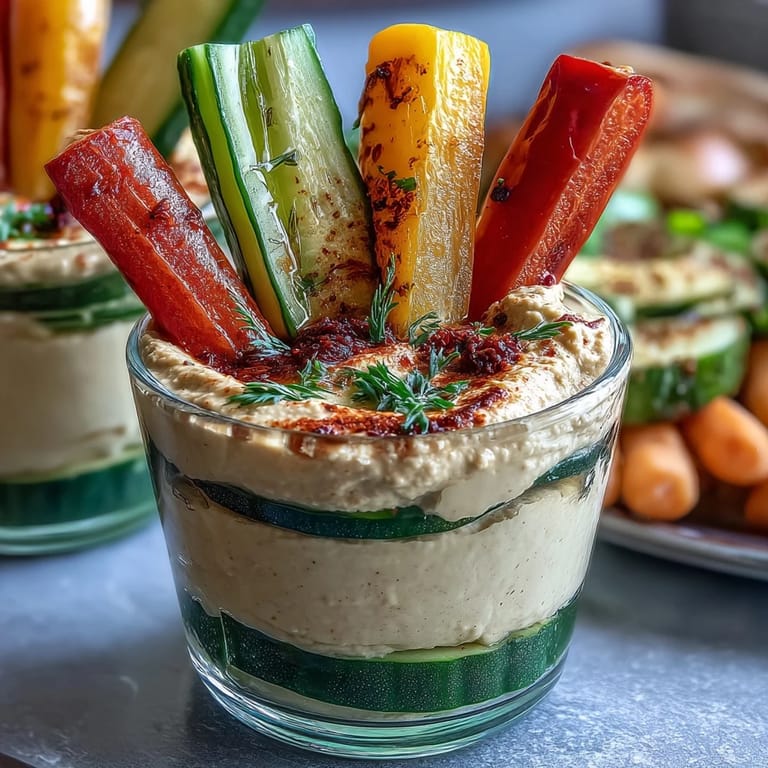
- Divide the hummus equally among 6 small lidded cups or jars, aiming for about 1/4 cup per container. Use the back of a spoon to smooth it into an even layer so there's plenty of surface area for dipping.
- Arrange the vegetables:
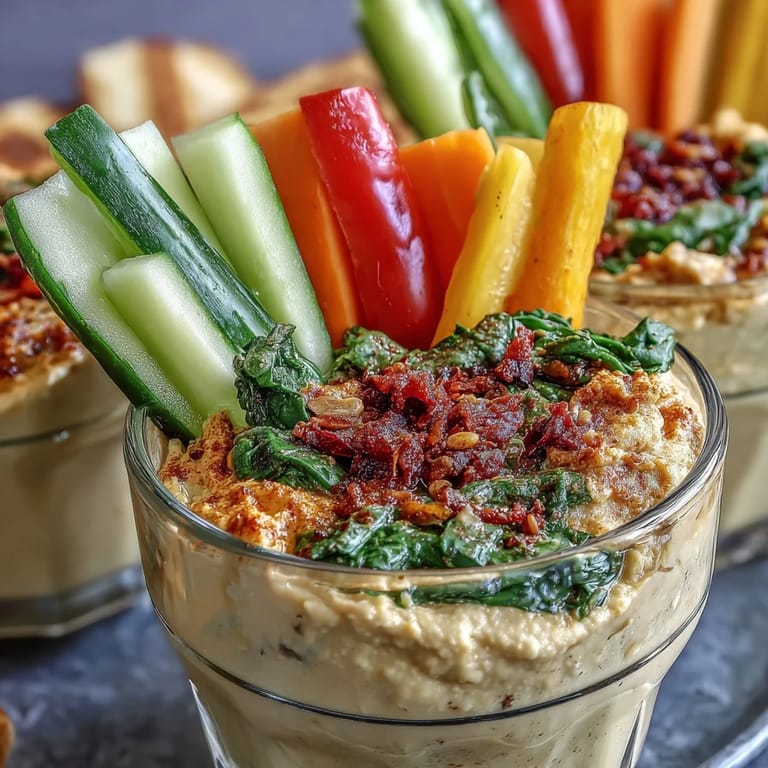
- Stand the vegetable sticks upright in the hummus like you're planting a little edible garden—this looks more appealing and keeps everything accessible. Mix up the colors and types so each cup feels like its own small feast.
- Cover and chill:
- Snap the lids on tight and refrigerate until you're ready to go; these stay fresh for up to 2 days, though they taste best the same day you make them. The cold hummus is part of what makes these so satisfying on a warm day.
 Pin it
 My neighbor brought these to a community garden potluck, and I watched a grumpy 7-year-old actually ask for seconds. That's when I understood these cups aren't just convenient—they're a small way to make eating well feel less like an obligation and more like a treat.
Why Hummus Is the Secret Weapon
Hummus does something magical here: it's creamy enough to feel indulgent, but it's packed with protein and fiber so you stay full longer than you would with just raw vegetables. It also keeps everything from drying out, which is honestly why these cups stay good in the fridge or a backpack for hours without falling apart. The fat in tahini (that's the sesame paste in hummus) helps your body absorb the fat-soluble vitamins in all those bright vegetables, so you're actually getting better nutrition when you eat them together.
Switching It Up by Season
Summer is when I throw in blanched green beans and radishes because they're crisp and cool. In fall, I've added roasted beets cut into thin sticks and raw fennel slices for something a little earthier. Winter is when I go for blanched broccoli florets and cauliflower, which hold up surprisingly well and feel more substantial.
Making It Your Own
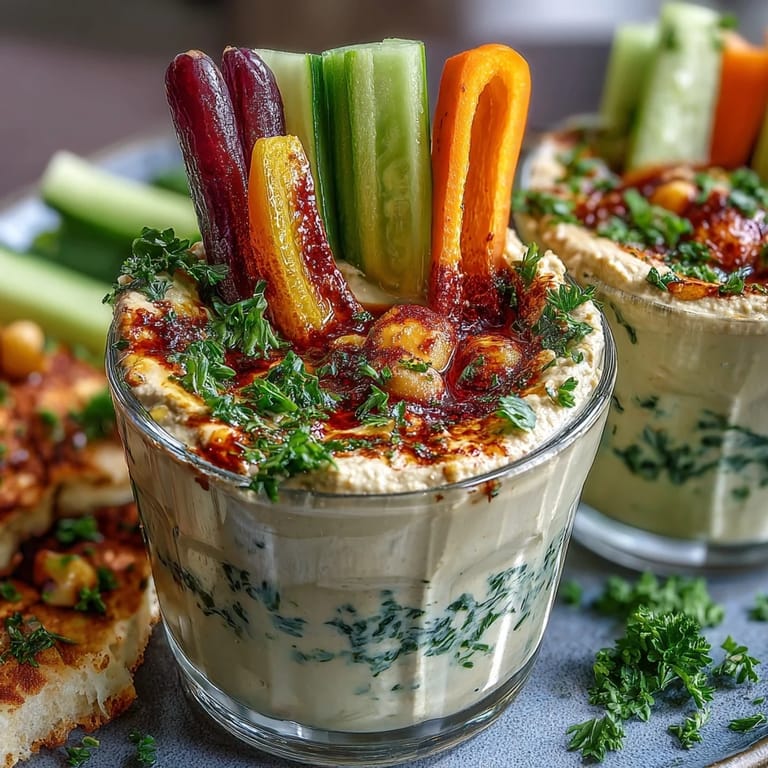
Once you nail the basic formula, these cups become endlessly customizable based on what's in your kitchen and who's eating them. I've drizzled the hummus with za'atar and olive oil for extra flavor, sprinkled paprika for a smoky kick, and even stirred in a little harissa when I'm feeling spicy. The beauty is that these cups take whatever direction you want them to go.
- Sprinkle hummus with paprika, za'atar, or a drizzle of good olive oil before adding vegetables for instant depth.
- Add protein by including baked tofu sticks or cheese cubes if you're not keeping them dairy-free.
- Store vegetables and hummus separately if making more than a few hours ahead, then assemble right before leaving.
 Pin it
 These little cups have become my secret for making sure everyone in my life actually eats something green. They're proof that sometimes the simplest combinations are the ones people reach for again and again.
Recipe Questions & Answers
- → What vegetables work best for these snack cups?
Crunchy vegetables like carrots, cucumbers, bell peppers, snap peas, and cherry tomatoes work best for easy dipping and fresh texture.
- → Can I prepare these snack cups in advance?
Yes, prepare and refrigerate the cups up to two days ahead to maintain freshness and convenience.
- → How should the vegetables be cut for serving?
Cut vegetables into sticks or bite-sized pieces so they fit upright in the cups and are easy to dip.
- → Are there optional additions to enhance flavor?
Sprinkle hummus with paprika, zaatar, or a drizzle of olive oil before adding vegetables to add extra flavor.
- → What containers are ideal for assembling these snack cups?
Small lidded cups or jars work well to keep the snack portable and fresh until ready to enjoy.