 Pin it
 Sifting through grass on a sunny morning looking for dandelions was my unexpected introduction to jelly making. No one mentioned how sticky your fingers would get—or how delightful the air would smell as the petals steeped, sweet and earthy, almost like summer itself distilled into a pot. I wasn’t sure what to expect the first time the golden liquid bubbled in my kitchen, but it seemed to brighten the entire place. There’s something oddly satisfying about turning what most people call weeds into something worthy of a homemade toast. Even the bees seemed to pause and witness the transformation.
I remember making a batch of dandelion jelly early one spring with a couple of friends who thought it was just a quirky notch on my domestic belt. As the pots steamed and the kitchen filled with floral warmth, conversation took on a relaxed rhythm—petals pinched, jokes traded, and toast sampled straight from the jar as soon as it set. The collective anticipation and eventual delight made it more than just a spread; it was a shared accomplishment.
Ingredients
- Dandelion Petals: Only use the bright yellow parts and gather them from pesticide-free lawns—avoiding bitter green bits makes all the difference.
- Water: Fresh cool water draws out the flavor; steep longer for a bolder jelly.
- Lemon Juice: Adds acidity and brightness and helps activate the pectin; fresh juice works best but bottled is reliable.
- Powdered Fruit Pectin: Key to setting the jelly; add it before sugar and whisk well to avoid lumps.
- Granulated Sugar: Sweetens and preserves—measure carefully to keep your jelly from being runny.
Tired of Takeout? 🥡
Get 10 meals you can make faster than delivery arrives. Seriously.
One email. No spam. Unsubscribe anytime.
Instructions
- Petal Prep Party:
- Grab a bowl and pinch off the yellow petals, leaving as much green behind as you can. Use your fingers—as sticky as they get, it’s easier than tweezers.
- Steep the Sunshine:
- Boil your water and pour it over the petals, cover, and let them infuse for at least 4 hours; the kitchen will smell mildly grassy and sweet.
- Strain Like a Pro:
- Drain the steeped petals through cheesecloth (or a fine sieve), then gently squeeze so you get every drop—your hands might turn slightly yellow, but it’s worth it.
- Jelly Boil Magic:
- Combine dandelion tea, lemon juice, and pectin in a large saucepan, stir constantly and bring to a rolling boil. When it boils hard, dump in the sugar, keep stirring, and boil vigorously for just 1–2 minutes; skim off any foam before pouring.
- Jar and Seal:
- Ladle hot jelly into sterilized jars leaving a bit of space at the top, wipe rims, seal, and process jars in boiling water for 5 minutes—or just cool and refrigerate to enjoy sooner.
 Pin it
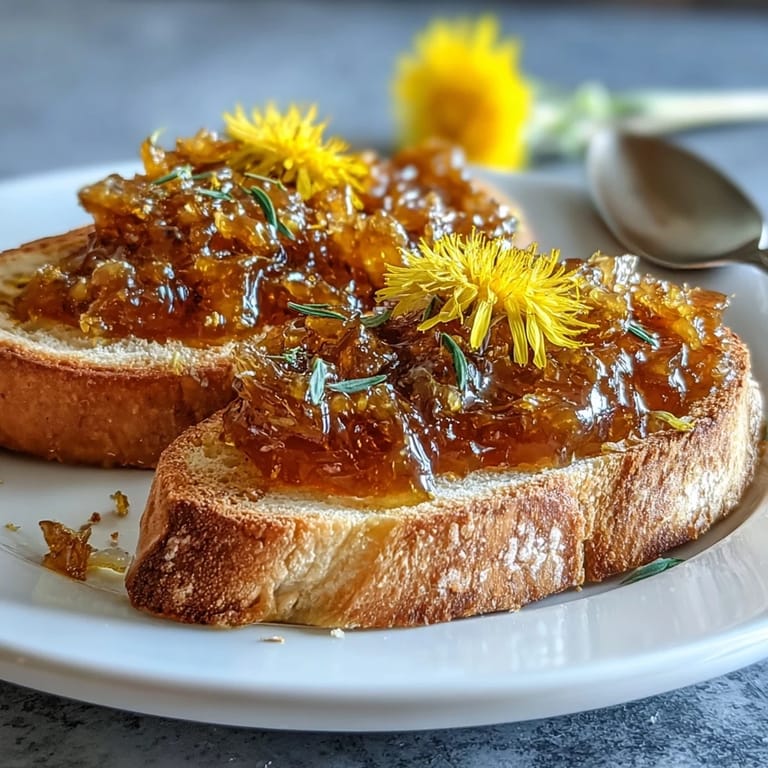
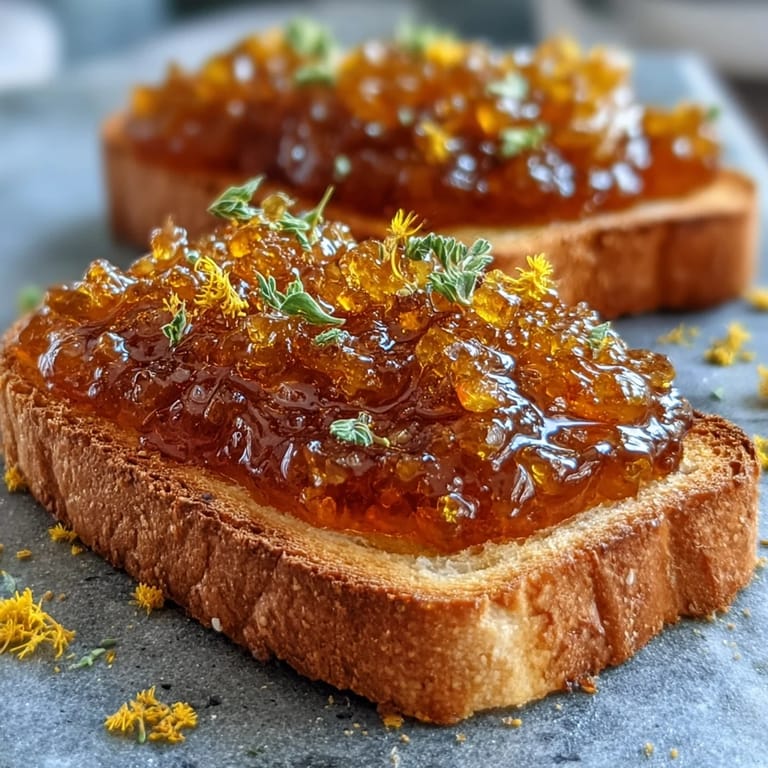
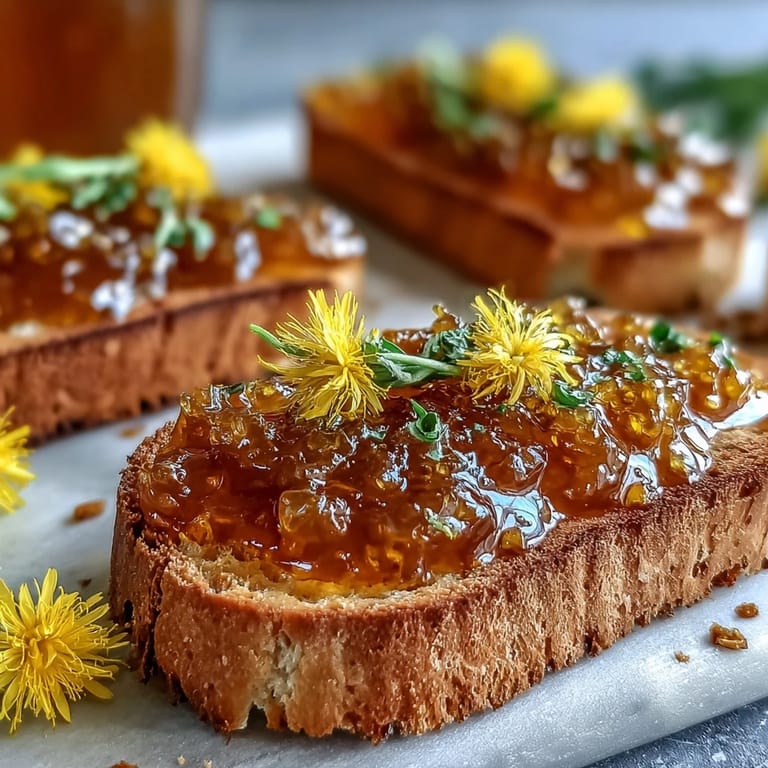
 The first time someone tasted my dandelion jelly, they grinned, spread it thick on warm bread, and asked if I had bottled spring. Watching people discover this unexpected sweetness, I realized the jelly wasn’t just a recipe—it was a tiny bit of edible surprise, sparking conversation and smiles.
How Dandelion Petals Turn to Jelly
When petals steep in hot water, their flavor and color migrate into the liquid; it’s this ‘dandelion tea’ that forms the base. Avoiding any green bits is vital—it keeps the taste bright, not bitter, and the jelly's color beautifully clear.
Steeping Time: Patience Wins
Letting the petals steep for at least four hours—preferably overnight—makes the final jelly floral and deeply colored. Rushing this step gives you a paler, less fragrant spread.
Troubleshooting Your Jelly
Sometimes jelly doesn't set or turns cloudy. That’s usually from undercooked pectin, not enough acidity, or rushing with cloudy liquid, but you can fix it. If your batch didn’t gel after 24 hours, just reboil it with a bit more pectin and lemon juice, then jar again.
- Always measure ingredients accurately.
- Cool jars fully before moving them.
- Use only pesticide-free petals for safety.
 Pin it
 This jelly is an invitation to see your backyard differently, and it’s always ready for a surprising breakfast or a thoughtful homemade gift. Give it a try, and you might never walk past a dandelion again without a little smile.
Recipe Questions & Answers
- → How do I ensure dandelions are safe to use?
Pick dandelions from untreated, pesticide-free locations and rinse thoroughly before separating petals.
- → Can I add extra flavors to the jelly?
Yes, a touch of orange zest with the lemon juice offers a citrusy twist to the floral base.
- → What should I do if the jelly remains liquid?
Jelly sets while cooling but, if loose after 24 hours, reboil it briefly with extra pectin to thicken.
- → What is the best way to strain petals?
Use fine mesh sieves or cheesecloth to maximize liquid extraction and minimize petal residue.
- → How should the jars be processed and stored?
Pour hot jelly into sterilized jars, seal, and boil for 5 minutes, or refrigerate for immediate use.
- → Is this spread suitable for special diets?
It’s vegetarian and gluten-free; always check labels for pectin and sugar if concerned about hidden allergens.
- → What is the jelly's flavor profile?
Dandelion jelly offers a gentle floral sweetness, likened to honey with subtle citrus notes from lemon juice.