 Pin it
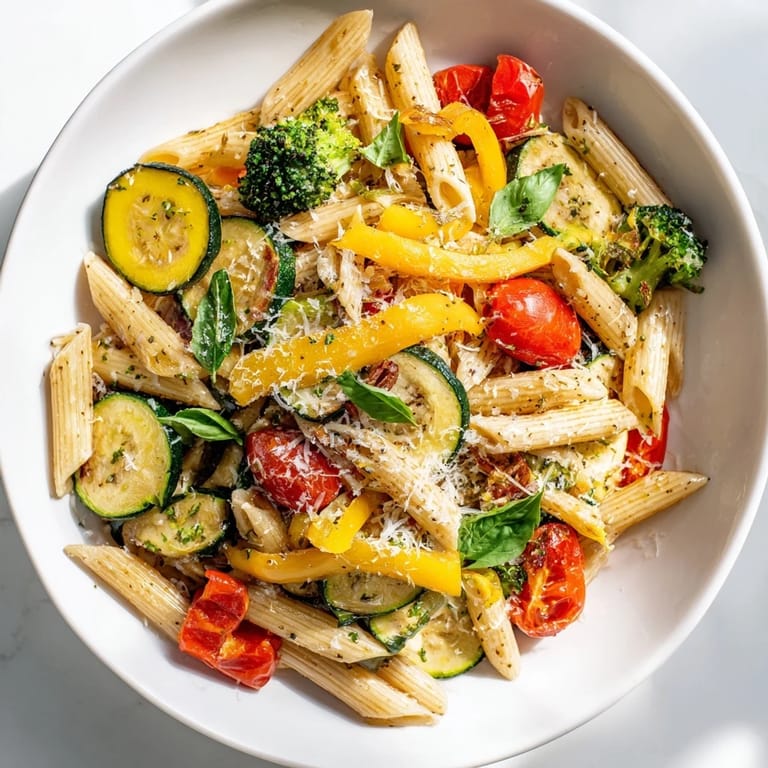
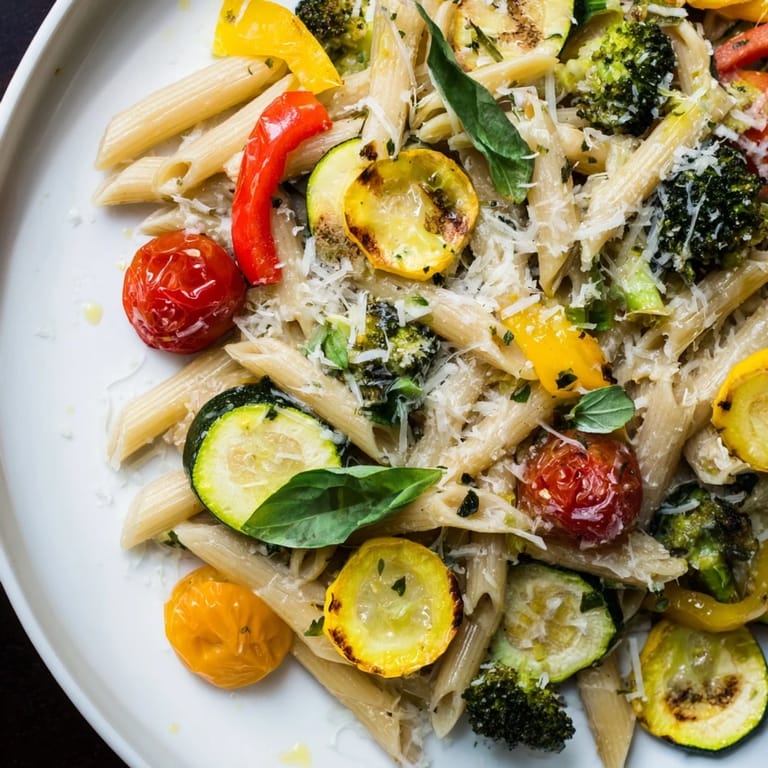
 My neighbor knocked on my door one Saturday morning with a canvas bag full of vegetables from her garden. I had no plan, just a jumble of colors on my counter and half a box of penne in the pantry. What came out of that kitchen experiment became something I still crave on warm evenings when I want something bright and filling without turning on the stove for too long. The vegetables roasted themselves into something sweet and caramelized while I boiled pasta and chatted with her through the window.
I made this for a friend who claimed she didnt like vegetables. She ate two bowls and asked if I used butter or cream because it tasted so rich. When I told her it was just olive oil and roasted veggies, she laughed and said I must have lied. Now she texts me every few weeks asking what temperature I used for the oven because she never wrote it down.
Ingredients
- Penne or fusilli pasta: Short shapes with ridges grab onto the oil and little bits of roasted vegetables, making every bite cohesive instead of slippery.
- Zucchini and yellow squash: They release moisture as they roast, so slice them thick enough that they hold their shape and develop golden edges.
- Red and yellow bell peppers: Sweetness intensifies in the oven, and the two colors make the dish look like summer even in February.
- Red onion: Roasting turns the sharpness into a mellow, almost jammy sweetness that melts into the pasta.
- Cherry tomatoes: Halve them so they burst and caramelize, creating little pockets of concentrated flavor.
- Broccoli florets: The tips get crispy, the stems stay tender, and they soak up olive oil like tiny green sponges.
- Extra virgin olive oil: Use the good stuff here because it carries flavor and coats everything without feeling heavy.
- Garlic: Fresh minced garlic blooms in warm oil and perfumes the whole skillet in seconds.
- Italian herbs: Dried works beautifully because the oven wakes up their oils, but fresh basil at the end adds a bright pop.
- Parmesan cheese: Grate it yourself from a block so it melts into the pasta water and clings to every piece instead of sitting on top like dust.
- Fresh basil or parsley: Stirred in at the end, they add color and a grassy brightness that balances the roasted sweetness.
Tired of Takeout? 🥡
Get 10 meals you can make faster than delivery arrives. Seriously.
One email. No spam. Unsubscribe anytime.
Instructions
- Preheat and prep your sheet:
- Set your oven to 220°C (425°F) and line a large baking sheet with parchment paper. This keeps the vegetables from sticking and makes cleanup almost nonexistent.
- Toss the vegetables:
- Spread zucchini, squash, bell peppers, onion, tomatoes, and broccoli on the sheet, drizzle with 2 tablespoons olive oil, and season with herbs, salt, and pepper. Use your hands to toss everything so each piece gets coated, then spread them out in a single layer so they roast instead of steam.
- Roast until golden:
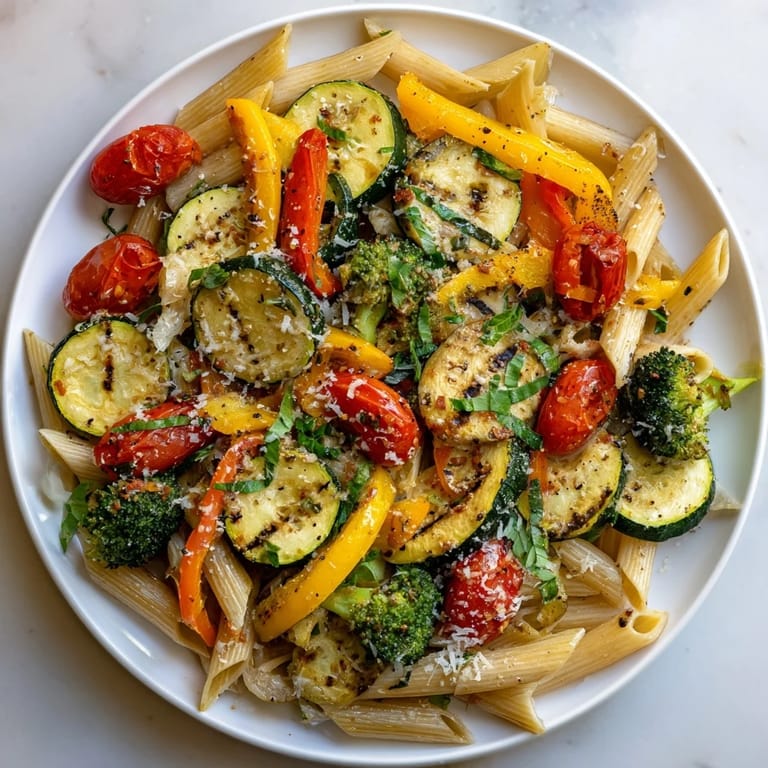
- Slide the sheet into the oven and roast for 18 to 20 minutes, stirring once halfway through. The edges should turn golden and the tomatoes should start to collapse into sticky little puddles.
- Boil the pasta:
- While the vegetables roast, bring a large pot of salted water to a rolling boil and cook the pasta until al dente. Before draining, scoop out half a cup of the starchy cooking water and set it aside.
- Bloom the garlic:
- In a large skillet over medium heat, warm the remaining tablespoon of olive oil and add the minced garlic. Let it sizzle for about 30 seconds until it smells nutty and golden but not brown.
- Combine everything:
- Add the roasted vegetables and drained pasta to the skillet and toss gently with tongs. If it looks dry, splash in a little pasta water at a time until everything glistens and clings together.
- Finish and serve:
- Remove the skillet from the heat, stir in half the Parmesan and the fresh herbs, and taste for salt. Plate it up, top with the remaining cheese, and add a squeeze of lemon if you want a little brightness.
 Pin it
 One night I made this for a potluck and forgot to bring serving spoons. People stood around the pan with forks, eating straight from the skillet and laughing about how good it smelled. Someone said it tasted like springtime, and I realized that food doesnt need to be fancy to feel special. It just needs to taste like care and a little bit of sunshine.
How to Customize This Dish
This recipe is a template, not a rule. In the spring, I swap in asparagus and snap peas. In the fall, I use mushrooms and diced butternut squash. If you want protein, toss in sautéed chicken, shrimp, or a can of drained chickpeas right before you add the pasta. I have even stirred in a handful of spinach at the end and let it wilt into the heat. The dish changes with the seasons and whatever you have on hand, and it works every single time.
Why Roasting Changes Everything
Roasting vegetables instead of boiling or steaming them transforms their texture and flavor. The high heat caramelizes their natural sugars, creating golden edges and a concentrated sweetness that you simply cannot get any other way. It also evaporates excess moisture, so your pasta does not end up sitting in a puddle of water. Once I started roasting vegetables for pasta, I stopped boiling them entirely. The oven does the work, and the results taste like you spent twice as long in the kitchen.
Storing and Reheating Leftovers
Leftovers keep in an airtight container in the fridge for up to three days. I eat them cold straight from the container for lunch, or I reheat them gently in a skillet with a splash of water or broth to loosen everything up. You can also turn leftovers into a baked pasta by transferring them to a dish, topping with mozzarella, and baking until bubbly.
- Add a drizzle of olive oil when reheating to refresh the flavor and keep the pasta from drying out.
- If the vegetables have released too much liquid overnight, drain it off before reheating so the dish does not turn soupy.
- Freshen it up with a handful of arugula or a squeeze of lemon juice right before serving.
 Pin it
 This dish reminds me that cooking does not have to be complicated to be memorable. Sometimes the best meals come from what you already have and a little bit of heat.
Recipe Questions & Answers
- → Can I prepare the vegetables ahead of time?
Yes, you can chop and arrange vegetables on the baking sheet up to 4 hours ahead. Store covered in the refrigerator, then roast when ready to serve. This makes weeknight cooking even faster.
- → What pasta shapes work best for this dish?
Penne, fusilli, or rigatoni are ideal because their ridges and curves catch the oil and vegetable pieces. Short, sturdy shapes prevent the delicate roasted vegetables from breaking apart during tossing.
- → How do I prevent the pasta from sticking together?
Use plenty of salted boiling water and stir occasionally while cooking. After draining, toss immediately with the warm vegetables and oil. The residual heat and coating will keep the pasta separate and prevent clumping.
- → What vegetables can I substitute?
Asparagus, snap peas, mushrooms, eggplant, and artichoke hearts all work wonderfully. Choose vegetables that roast well and hold their shape. Seasonal produce offers the best flavor and makes shopping easier throughout the year.
- → Is this dish naturally vegetarian and vegan-friendly?
The dish is vegetarian as written. For vegan, simply omit the Parmesan or use a plant-based cheese alternative. The roasted vegetables and garlic-infused oil provide plenty of flavor on their own.
- → Can I add protein to this dish?
Absolutely. Pan-sear chicken breast, shrimp, or sautéed chickpeas work beautifully. Add protein after the vegetables are roasted, or cook separately and toss together for a heartier main course.