 Pin it
 The first time I stood in a beachside kitchen in Ensenada, watching someone toss fresh fish into golden, bubbling oil, I understood why these tacos had become legendary. The batter crackled and crisped in seconds, and the aroma was unlike anything I'd recreated at home until I finally figured out the secret: cold sparkling water and the courage to let the oil get hot enough. Now whenever I make these, my kitchen fills with that same salty, fried-to-perfection smell, and suddenly everyone's gathered around waiting.
I made these for a casual Tuesday night dinner when my neighbor mentioned craving fish tacos, and she came back three more times that week asking for the recipe. That's when I knew I'd nailed something—not because they were fancy, but because they felt like a celebration in the simplest way. The lime sauce brought everything alive, and watching someone's face light up after that first bite never gets old.
Ingredients
- Firm white fish fillets (cod or halibut): Cut into strips about the width of your pinky—not too thick or they won't crisp through before the batter burns, not too thin or they'll fall apart.
- All-purpose flour: The foundation of your batter, but you'll also use a little extra for dredging, which helps the batter cling.
- Cornstarch: This is what creates that crackling, shattering texture; don't skip it or your batter will be dense.
- Baking powder: It sounds small, but it creates tiny air pockets that make the crust supremely light and crispy.
- Cold sparkling water: Ice-cold is key—warm water activates gluten and makes the batter tough, but the cold keeps it tender and the bubbles add airiness.
- Vegetable oil: You need enough to submerge the fish halfway; save the oil if you fry often, as it can be reused once or twice.
- Mayonnaise and sour cream: Together they create a sauce that's tangy but not harsh, and the fat keeps it silky even with aggressive lime juice.
- Fresh lime juice and zest: The zest adds brightness that bottled juice can never match; one lime usually gives you enough.
- Green cabbage: Shred it as thin as possible—it softens slightly from the heat and sauce but stays crunchy enough to anchor every bite.
- Corn tortillas: Warm them right before serving so they're pliable and steamy, not stiff and cold.
Tired of Takeout? 🥡
Get 10 meals you can make faster than delivery arrives. Seriously.
One email. No spam. Unsubscribe anytime.
Instructions
- Make the sauce first and forget about it:
- Stir mayo, sour cream, minced garlic, lime juice, and zest together in a small bowl, then taste and adjust with salt, pepper, and a drop of hot sauce if you like heat. Chilling it while you cook gives the flavors time to marry and makes the sauce less likely to break under the warm fish.
- Build your batter carefully:
- Whisk flour, cornstarch, baking powder, salt, garlic powder, paprika, and pepper together first, then slowly pour in the ice-cold sparkling water while whisking—you want something the consistency of thick pancake batter, not a thin soup. If it sits for more than a few minutes, it'll start to lose its fizz and get thicker, which is fine.
- Get your oil to the right temperature:
- A thermometer is your friend here; 350°F is the sweet spot where the fish cooks through gently while the outside shatters. If it's cooler, the batter soaks up oil and gets greasy; if it's hotter, the outside burns before the inside cooks.
- Dry the fish and do the double dredge:
- Pat your strips completely dry with paper towels—any moisture on the surface fights against crispy coating. Dredge each piece lightly in plain flour first, shake off the excess, then dip into the batter, letting the excess drip back into the bowl so you don't get thick, soggy patches.
- Fry in batches and don't crowd the pan:
- Work in two batches if needed; the temperature will plummet if you add too much fish at once, and crowding causes them to steam instead of fry. Cook for about 3 to 4 minutes, turning once halfway through, until the batter is deep golden and the fish flakes easily when pierced.
- Drain on a rack, not paper towels:
- A wire rack lets air circulate underneath so the batter stays crispy as it cools; paper towels trap steam and can make the bottom soggy.
- Warm your tortillas right before building:
- Dry skillet over medium heat for about 20 seconds per side, or wrap them in a damp towel and warm in a 300°F oven—they should be just hot enough to be flexible and smell toasty.
- Assemble with intention:
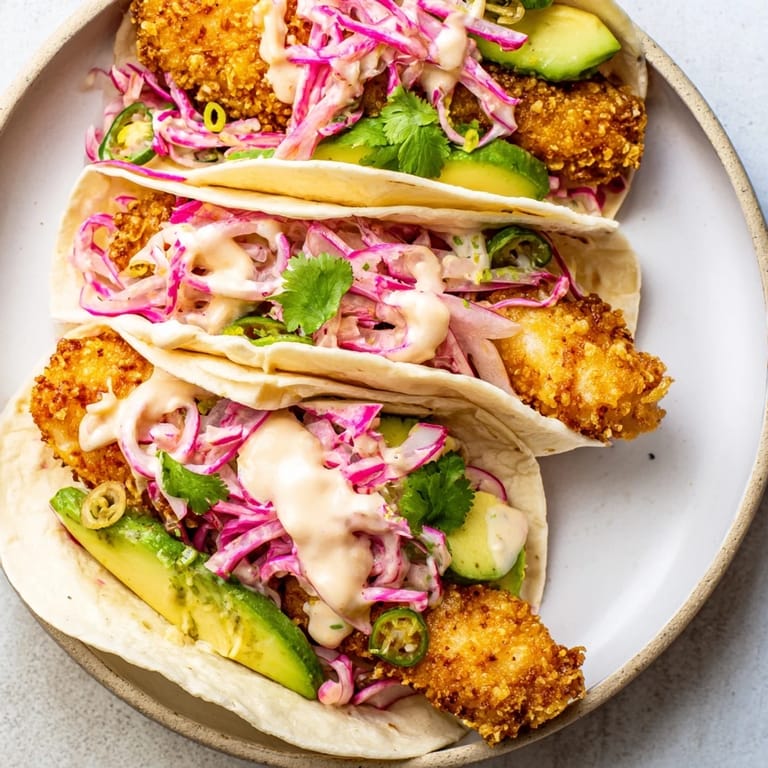
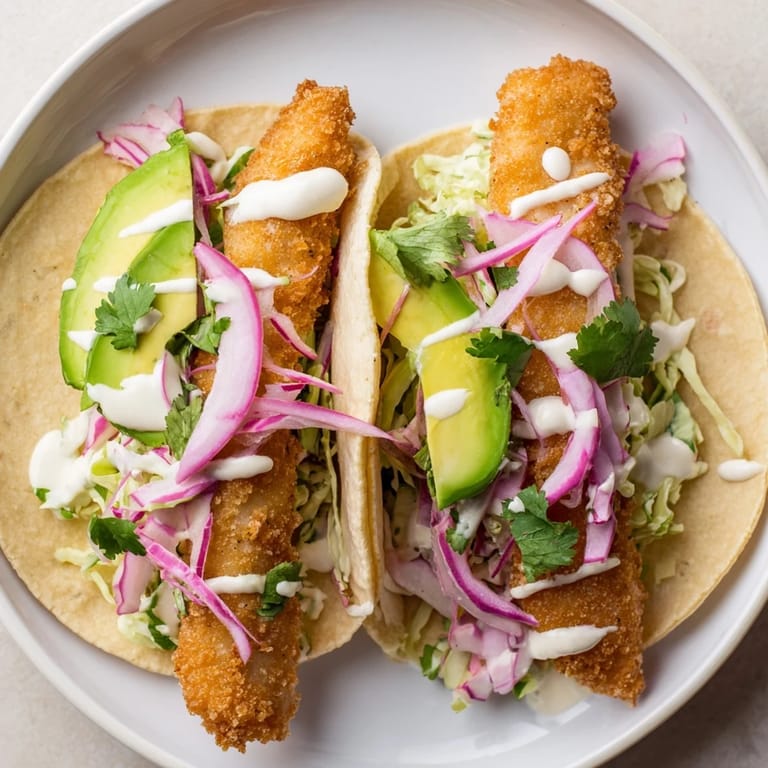
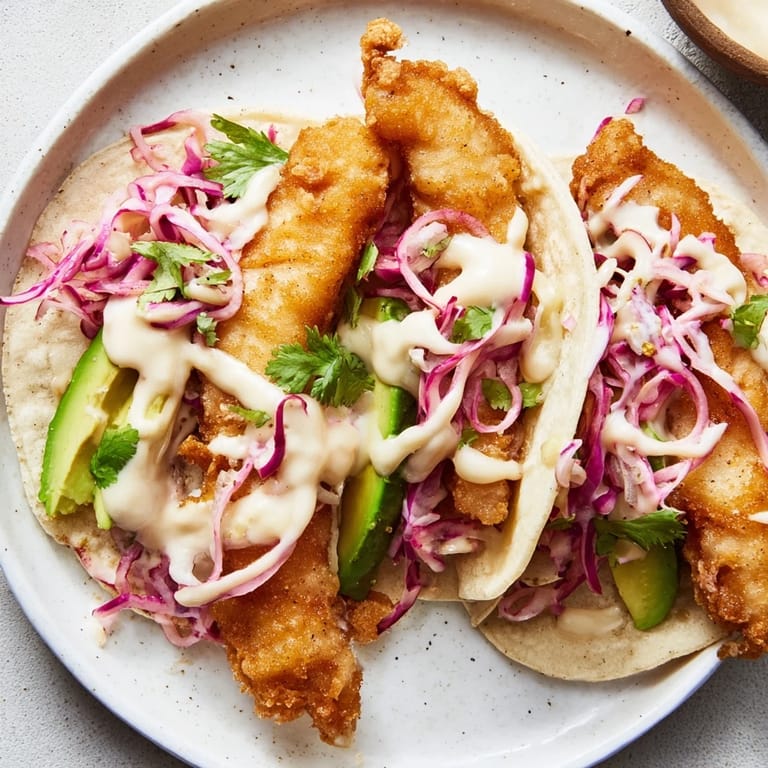
- Place fish pieces down first, then a small handful of shredded cabbage (it acts as insulation so the tortilla doesn't get soggy immediately), then cilantro, onion slivers, avocado, and finally a generous drizzle of lime sauce. The order matters because each layer protects what's underneath.
 Pin it
 There's a particular magic in these tacos that has nothing to do with technique and everything to do with how they bring people together. I've served them at beach picnics, casual weeknight dinners, and impromptu gatherings, and somehow they always feel like an occasion, even when it's just Tuesday.
The Crispy Crust Secret
I learned the hard way that the difference between mediocre fried fish and restaurant-quality crispy fish comes down to three things: temperature control, not moving the fish around constantly, and the carbonation in sparkling water. The bubbles create pockets of air that stay separate even as the batter sets, so you end up with a light, shatter-crisp shell instead of a dense, oily coating. It sounds scientific, but really it just means the batter gets out of the way of the fish's natural flavor rather than smothering it.
Building the Perfect Bite
The architecture of a fish taco matters more than you'd think. Cold, crunchy cabbage against warm, crispy fish; creamy, tangy sauce; the slight sharpness of red onion; soft avocado; and bright cilantro—each element has a job, and they work together to create something balanced and alive. I've learned that piling everything on randomly leads to some bites being sauce-heavy and others being dry, so I spread components intentionally, using the cabbage as a protective layer that keeps the tortilla from getting soggy while also adding texture and freshness.
Variations and Swaps That Work
These tacos are forgiving enough to adapt based on what's in your kitchen or what you're craving. Mahi-mahi or tilapia work beautifully if cod isn't available, and I've even done them with halibut when I wanted something with more substance. You can mix green and red cabbage for visual appeal and slightly different flavors, or swap cilantro for parsley if someone at your table doesn't like cilantro. For a lighter version, brush battered fish with a little oil and bake at 425°F on a lined sheet, though the result will be crispy but not quite as shattering as deep-fried.
- A squeeze of habanero hot sauce mixed into the lime sauce adds a gentle heat without overwhelming the delicate fish.
- If you can't get fresh limes, use bottled lime juice in the sauce but serve fresh lime wedges anyway—the juice brings acidity, but the wedges add brightness and aroma.
- Leftover cooked fish can be refrigerated and warmed gently in a low oven, though it's best enjoyed fresh and hot.
 Pin it
 These tacos remind me that some of the most memorable meals come from recipes that are simple at their core but require a little care in the execution. Make them once and you'll understand why they've traveled from coastal Mexico to dinner tables everywhere.
Recipe Questions & Answers
- → What type of fish is best for these tacos?
Firm white fish such as cod, halibut, mahi-mahi, or tilapia are ideal for maintaining texture when fried.
- → How can I make the batter extra crispy?
Including cornstarch and using cold sparkling water in the batter helps achieve a light, crispy coating when fried.
- → Can I bake the fish instead of frying?
Yes, baking at 425°F on a lined tray with a little oil produces a lighter but still crisp result.
- → What ingredients give the lime sauce its flavor?
The sauce combines mayonnaise, sour cream, fresh lime juice, lime zest, garlic, and optional hot sauce for a zesty creamy finish.
- → How should the tortillas be prepared?
Warm tortillas briefly in a dry skillet or oven to enhance their pliability before assembling the tacos.
- → What toppings complement the fish best?
Shredded cabbage, chopped cilantro, sliced red onion, avocado slices, and a drizzle of creamy lime sauce create a balanced texture and freshness.